






Россия
Россия
УДК 581.5 Экология растений. Этология. Растение и окружающая среда (биономия)
Среди основных процессов деградации почв Астраханской области является загрязнение почвенного покрова химическими веществами антропогенного происхождения (сельское хозяйство, автотранспорт, нефтепереработывающая промышленность). В связи с усилением техногенной нагрузки на экосистемы возникает необходимость в проведении постоянного мониторинга содержания и накопления химических элементов как в почве, так и в растениях на них произрастающих. В статье проведена оценка особенностей элементного состава (Fe, Zn, Ni, Cu и Mn) почв и полыни песчаной Artemisia arenaria (DC, 1838) Лиманского, Икрянинского, Камызякского и Володарского районов Астраханской области. Методом атомно-абсорбционной спектрофотометрии определены концентрации химических элементов в пробах почв и растений, а также на основании полученных данных рассчитаны коэффициенты биологического накопления. Отмечено, что в почвах Астраханской области по концентрации преобладали железо и марганец, а меньше всего обнаружено меди. При этом в почвах установлено превышение кларкового и фонового значений меди. Икрянинский район отличался наибольшими концентрациями железа, цинка и никеля в почвах, а Камызякский район – меди и марганца. Наименьшими концентрациями большинства исследованных металлов отличался Лиманский район. По концентрации в полыни песчаной химические элементы располагались в следующем убывающем ряду: Fe > Mn > Zn > Cu > Ni. Наибольшее содержание химических элементов отмечено в растениях Икрянинского и Камызякского районов, а наименьшее содержание выявлено в растениях Володарского района. Наибольшие величины коэффициента накопления химических элементов растениями зафиксированы в Икрянинском и Камызякском районе, при этом лишь цинк растение способно активно аккумулировать из почвы (Kн > 1). Cu, Ni, Mn и Fe из почвы в растение переходят с меньшей скоростью.
химические элементы, полынь песчаная, почва, накопление, Астраханская область, коэффициент накопления
Introduction
The Astrakhan region is acutely aware of problems associated with soil degradation and pollution, caused by anthropogenic processes. Anthropogenic processes that aggressively impact the soil surface alter the natural functioning of soils, resulting in a deterioration of their properties and, consequently, a decrease in their natural and economic value [1]. One of the main processes of soil degradation in the Astrakhan Region is soil pollution by anthropogenic chemicals (agriculture, motor transport, and the oil refining industry) [2]. Due to the increasing anthropogenic load on ecosystems, there is a need for continuous monitoring of the content and accumulation of chemical elements in both the soil and the plants growing in it. The study of metal behavior in the soil-plant system is becoming increasingly important and can be used to predict the intensity of biogenic migration and to assess the state of soil contamination in a region. Based on the above, the objective of this study was to evaluate the elemental composition of soils and sandy wormwood Artemisia arenaria (DC, 1838) in the Limansky, Ikryaninsky, Kamyzyaksky, and Volodarsky districts of the Astrakhan region.
Materials and Methods
The study involved soil samples and Artemisia arenaria (DC, 1838) (Fig. 1), collected from agricultural lands in the Limansky, Ikryaninsky, Kamyzyaksky, and Volodarsky districts.
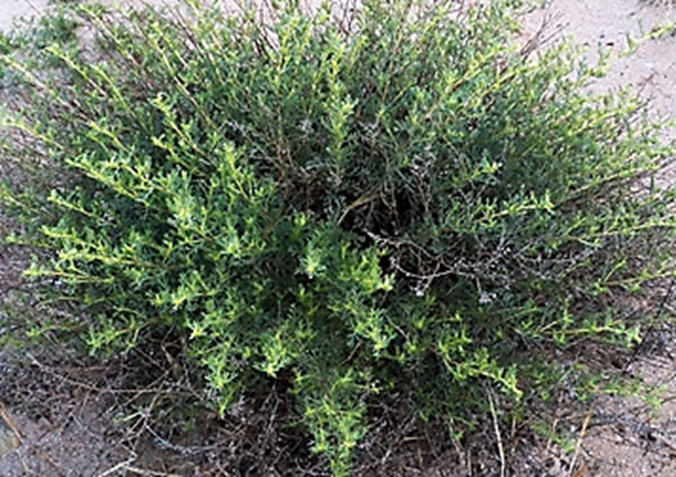
Fig. 1. Аrtemisia arenaria (DC, 1838)
Artemisia arenaria is a host for diverse communities and a unique test species for assessing the health of plant communities and vegetation. The abundance of this species in the Astrakhan region reaches 80%. The study was conducted at the Department of Hydrobiology and General Ecology at the Astrakhan State Technical University. Chemical elements (Fe, Cu, Mn, Zn, Ni) were determined using atomic absorption spectrophotometry in accordance with GOST 30178-96 and expressed as mg/kg dry matter. The study results were statistically processed using Microsoft® Excel™ software. To assess the accumulation of chemical elements in ecosystem components, the accumulation coefficient Kn was calculated:
Kn = Ci / С,
where Ci – is the chemical element content in plants; С – is the chemical element content in the soil.
Results and discussion
Iron is the most abundant element in the soils of the Astrakhan region among the studied chemical elements. The Fe concentration in soil samples from the Ikryaninsky district was highest compared to those from the Kamyzyaksky, Volodarsky and Limansky districts, respectively (Fig. 2).
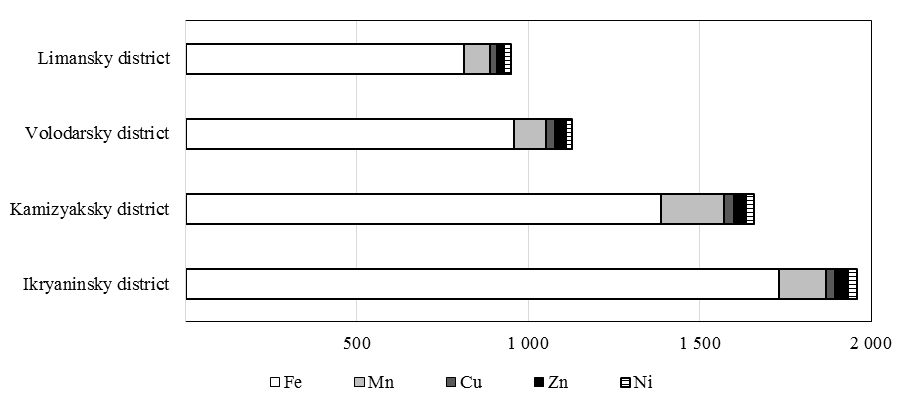
Fig. 2. Elemental composition of soils in the Astrakhan region, mg/kg dry matter
It should be noted that the identified values of the chemical element do ot exceed the clarke and back ground values of the region (table).
Clark of Earth's soils and values of the conditional background of the region, mg/kg
|
Indicators |
Cu |
Mn |
Zn |
Ni |
Fe |
|
Clark of Earth's soils* |
20 |
850 |
50 |
40 |
38 000 |
|
Conditional background of the region** |
23 |
450 |
45 |
25 |
– |
* Compiled according to [3]; ** compiled according to [4].
The dynamics of the Zn distribution in the Astrakhan region soil samples is similar to the distribution of iron. Thus, according to the zinc content in the soils, the studied areas are located in the following row: Ikryaninsky district > Kamyzyaksky district > Volodarsky district > Limansky district. Zinc concentrations in the soils of the Astrakhan region were within the control values (Clark of the Earth's soils and background concentrations). According to the gradations of soils of the Astrakhan region according to the availability of Zn, proposed by A. N. Gundareva and E. I. Melyakina [5], the studied soils of the Astrakhan region belong to the medium-zinc-rich (25-40 mg/kg of dry matter). The soils of the Ikryaninsky district had the highest nickel values, which were slightly higher than the background values of the region. Kamyzyaksky district occupied the second position in terms of metal content in the soil. The revealed values are comparable to the background values. The minimum values of nickel were noted in the soils of the Volodarsky district.
All studied soil samples contained nickel concentrations below Clark values. Copper concentrations in soil samples ranged from 21 mg/kg (Limansky district) to 28.5 mg/kg (Kamyzyaksky district). At the same time, these values were higher than Clark's. It was noted that only the concentration of copper in the soil samples of the Limansky district did not exceed the background values established for the region. According to the gradations of soils in the Astrakhan region in terms of Cu content proposed by A. N. Gundareva and E. I. Melyakina [5], the studied soils belong to well-copper-rich soils (> 20 mg/kg of dry matter). The highest values of manganese were recorded in the soils of the Kamyzyaksky district. At the same time, the soils of the Limansky district are least provided with manganese. The detected concentrations of manganese in all soil samples did not exceed the control values. According to the grading of soils of the Astrakhan region according to the availability of Mp, proposed by A. N. Gundareva and E. I. Melyakina [5], the studied soils of the Astrakhan region belong to the medium-rich in manganese (100-250 mg/kg of dry matter).
Thus, the Ikryaninsky district had the highest concentrations of iron, zinc and nickel in the soils, while the Kamyzyaksky district had the highest concentrations of copper and manganese. The Limansky district was distinguished by the lowest concentrations of most of the metals studied. The following decreasing series characterizes the features in the accumulation of metals by sandy wormwood: Fe > Mn > Zn > Cu > Ni. In the sandy wormwood in the studied areas, a high iron content was found among all the studied chemical elements (Fig. 3).
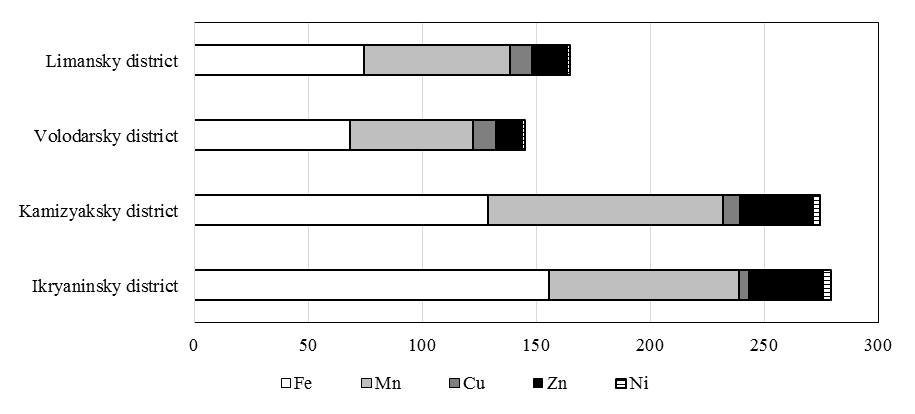
Fig. 3. Iron content in Artemisia arenaria, mg/kg dry matter
Iron plays an important role in plant life. It participates in various biochemical processes such as photosynthesis, respiration, and nitrogen assimilation. The iron content in the plants of the Ikryaninsky district is higher than in other studied areas. Manganese was in second place in terms of concentration. Manganese plays an important role in plant life, participating in various processes that affect growth and development. It increases resistance to adverse environmental factors. The highest values of manganese were found in plants in the Kamyzyaksky district. It is known that with increasing humidity, the mobility of manganese in soils increases. This may be why the concentration of manganese in plants growing in Kamyzyaksky and Ikryaninsky districts is higher than in Volodarsky district.
Zinc and copper are also essential for the growth and development of roots, stems, leaves, and flowers. Copper also promotes drought resistance in plants. Wormwood from the Ikryaninsky and Kamyzyaksky districts has the highest zinc content. Meanwhile, copper content is highest in plants from the Volodarsky and Limansky districts, and lowest in the Ikryaninsky district. Nickel plays an important role in plant life, but its effect on them is ambiguous. This is probably why its concentrations in plants do not exceed 5 mg/kg of dry matter. Wormwood in the Ikryaninsky and Kamyzyaksky districts is characterized by its highest content. Sandy wormwood accumulates more chemical elements in the Ikryaninsky and Kamyzyaksky districts, and the least amount was found in plant samples from the Volodarsky district. This is probably due to the fact that the sandy and sandy loam soils of the Volodarsky district are less well-supplied with trace elements.
The maximum values of the coefficients of accumulation of chemical elements by plants were found in Ikryaninsky and Kamyzyaksky districts, in contrast to Volodarsky and Limansky. The amount of zinc accumulation by plants of the Ikryaninsky and Kamyzyaksky districts is more than 1, indicating that the plant is able to actively accumulate this chemical element from the soil.
Drought resistance in plants of the arid zone is understood as the ability to maintain their existence in arid habitats with the least harm to their growth and development. The higher the drought tolerance of a plant species, the less heavy metals accumulate in it. Perhaps this is due to the lower content of metals and, consequently, the values of their accumulation by wormwood in the more arid conditions of the Limansky, and especially in the Volodarsky district.
At the same time, according to the research of M. V. Dmitrieva and co-authors [2], the average anthropogenic load was noted in Ikryaninsky and Kamyzyaksky districts, while in Volodarsky and Limansky it was low. An increase in anthropogenic load also contributes to a greater accumulation of chemical elements by plants.
Conclusion
In the soils of the Astrakhan region, there is an absolute predominance of iron and manganese. The highest concentrations of iron, zinc, and nickel were recorded in the Ikryaninsky district, while the Kamizyaksky district had the highest concentrations of copper and manganese. Artemisia arenaria is dominated by the same chemical elements found in the soil. Compared to other chemical elements studied, zinc is actively accumulated by plants (accumulation coefficient > 1). At the same time, copper, nickel, manganese, and iron are transferred from the soil to plants at a slower rate. The highest bioavailability of metals was observed in the Ikryaninsky and Kamzyaksky districts, while the lowest was observed in the Volodarsky district.
1. Дмитриева М. В., Сизов А. П., Бармин А. Н. Оценка комплексного антропогенного воздействия на земли Астраханской области // Сб. ст. Всерос. науч.-практ. конф. (с международ. участием) «Актуальные вопросы землепользования и управления недвижимостью» (Екатеринбург, 2–3 апреля 2019 г.). Екатеринбург: Изд-во: Урал. гос. гор. ун-т, 2019. С. 585–592.
2. Дмитриева М. В., Бармин А. Н., Бузякова И. В. Мониторинг сельскохозяйственных земель в Астрахан-ской области // Геология, география и глобальная энер-гия. 2011. № 2 (41). С. 304–312.
3. Виноградов А. П. Мониторинг сельскохозяйственных земель в Астраханской области. М.: Изд-во АН СССР, 1957. 235 с.
4. Богданов Н. А. Экологическое зонирование: научно-методические приемы (Астраханская область). М.: URSS, 2005. 172 с.
5. Гундарева А. Н., Мелякина Э. И. Биогеохимическая характеристика почв Аридной зоны // Материалы VIII Международ. конф. «Биологическое разнообразие Кавказа» (Нальчик, 12–15 октября 2006 г.). Нальчик: Изд-во Кабардино-Балкар. гос. аграр. ун-т им. В. М. Кокова, 2006. С. 18–20.